Jacksonville treatment guide
Spider Veins in Jacksonville: What Causes Them and How to Clear Them
You noticed them in a mirror or a beach photo — thin red, blue, or purple veins webbing across your thighs, calves, or ankles. Spider veins are extremely common, usually harmless, and very treatable. This page explains what they are, why they show up, when they hint at something deeper, and how sclerotherapy clears them.
At Miami Vein & Wellness in Jacksonville, that conversation starts with a physician-supervised evaluation so the plan fits your veins, not a template.
Book a vein evaluationWhat Spider Veins Actually Are
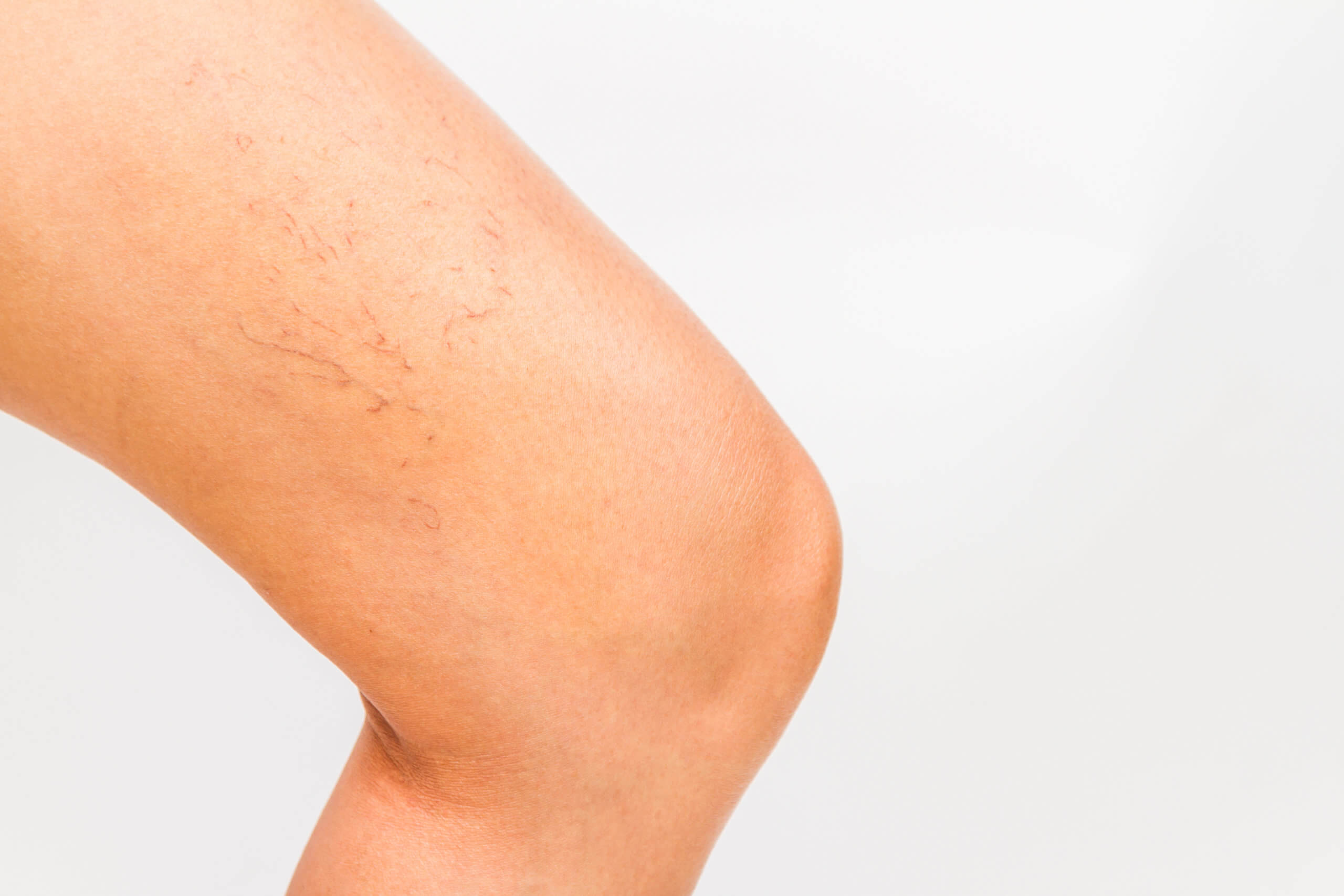
Spider veins, known medically as telangiectasias, are tiny veins sitting just under the surface of the skin. They appear as red, blue, or purple clusters in web-like or branching patterns that remind people of tree branches or spider webs, most often on the legs and sometimes on the face. For the majority of people they are purely cosmetic, though some notice mild aching, itching, a burning sensation, or a heavy feeling in the area by the end of a long day.
It helps to know how spider veins differ from their larger cousins. Varicose veins are bigger, raised, rope-like vessels that bulge above the skin and develop when the one-way valves inside a vein weaken and let blood pool. Both, however, sit on the same spectrum of venous disease — spider veins are the small, surface end of it. On average, roughly half of women and a little under half of men in the United States have spider veins, varicose veins, or both, and both become more common after age 50.
Spider veins rarely travel alone. Beneath many clusters sit larger blue-green reticular veins, sometimes called feeder veins, that run deeper under the skin and quietly supply the surface pattern you can see. Reticular veins are largely hereditary and can exist on their own or act as the source behind a spreading cluster. Mapping and treating the feeder pattern, rather than chasing one visible vein at a time, tends to clear an area more completely and in fewer sessions.
Underneath all of this is the leg's circulation at work. Veins return oxygen-poor blood toward the heart, and in the legs that means fighting gravity: the calf muscles squeeze the deep veins while one-way valves keep blood from sliding back down. This system is called the venous pump. When you sit or stand for long stretches, blood can pool and raise the pressure inside the leg veins; over time, in susceptible people, that pressure can stretch vein walls and strain the valves. Visible surface veins are sometimes the first outward sign of that deeper pressure.
The strongest predictor of all of this is genetics. If your parents or grandparents had visible leg veins, your odds go up. On top of family history, the usual contributors are hormonal shifts (pregnancy, birth control, menopause, hormone therapy), prolonged standing or sitting, excess weight that raises pressure in the leg veins, age, and sun exposure, which thins facial skin and makes small vessels more obvious. None of that means you did something wrong — it simply explains why veins appear and why new ones can show up later.
What You Might Be Noticing
A few patterns help sort everyday cosmetic veins from the ones worth a closer look, and help you know whether sclerotherapy is likely to suit you.
Web-like clusters on the legs
Red, blue, or purple threads in branching or starburst patterns on the thighs, calves, or ankles are the classic spider vein presentation and the most common target for treatment.
Deeper blue-green lines underneath
Slightly larger blue or green veins beneath the surface are reticular, or feeder, veins. They can feed a spider cluster, which is why an evaluation looks at the pattern as a whole rather than each vein in isolation.
Legs that feel heavy, tired, or achy
Heaviness, tightness in the calves, restlessness, or ankle swelling that builds through the day can point beyond cosmetics toward chronic venous insufficiency. These deserve a physician-supervised assessment rather than self-diagnosis.
Veins that keep spreading
Clusters that grow or multiply over months often have an underlying feeder vein driving them. Treating the source tends to give a cleaner, longer-lasting result than treating only what is visible.
Larger, raised, rope-like veins
Bulging, twisted veins that sit above the skin are varicose rather than spider veins. They can ache or throb and tend to worsen over time, so they warrant evaluation rather than waiting them out.
You are in good general health
Good candidates are generally healthy, not currently pregnant or breastfeeding, and have no history of deep vein thrombosis or a clotting disorder. A consultation and medication review confirm whether treatment is appropriate for you.
How We Treat Spider Veins in Jacksonville
For spider veins and small varicose veins on the legs, sclerotherapy has been the go-to approach for decades. A medical-grade solution called a sclerosant — typically a saline- or detergent-based agent — is injected into the target vein through a very fine needle. It irritates the vein's inner lining so the vessel scars and seals shut; blood reroutes through nearby healthy veins, and your body gradually reabsorbs the collapsed one over the following weeks. The full step-by-step, pricing, and visit walkthrough live on our sclerotherapy treatment page.
Because every set of legs is different, technique is matched to the veins. Conventional injections handle classic surface spider veins; foam sclerotherapy, where the solution is mixed with small volumes of air into a cream-like consistency, covers more surface area, suits larger underlying veins, and shows up on ultrasound; and ultrasound-guided injection maps and reaches feeder veins too deep to see. Clearing a deeper feeder vein can also fade the smaller reticular and spider veins it was supplying.
Patients sometimes ask about laser instead. For leg spider veins, our sister practice, Miami Vein Center, has long favored sclerotherapy: heat-based laser relies on heat that many patients describe as a burning sensation, and it can leave lighter spots in the skin (hypopigmentation), a particular concern on the legs and in darker skin tones. Because injections are generally better tolerated, more veins can usually be addressed in a single visit, which tends to move results along faster.
Importantly, treatment starts with an evaluation, not a needle. Examining the legs, reviewing your history, and using duplex ultrasound when indicated rules out an underlying issue such as venous reflux and helps the treated area stay clear longer. Most cosmetic spider veins clear in a short series, often two to four sessions spaced several weeks apart, occasionally more depending on how many veins you have and how your body responds. At Miami Vein Center, about 80 percent of patients reached optimal clearing within roughly four sessions, while denser cases needed more; individual plans vary, and we confirm yours in person.
What to Expect, From Evaluation to Clear Legs
Sclerotherapy is an in-office process, not a single dramatic event. Here is the arc most patients move through, recognizing that your provider sets the specifics for your legs.
-
The evaluation comes first
Your visit opens with a physician-supervised exam: the legs are examined, the vein pattern is mapped, and your medical history and medications are reviewed. Duplex ultrasound is used when indicated to check blood flow and rule out an underlying issue before any treatment is planned.
-
The injection session
A typical session runs about 30 to 60 minutes, with multiple veins treated in one sitting through a very fine needle. No anesthesia is needed; most people feel a mild pinch or brief sting. You stay awake and comfortable throughout.
-
Right after, and the first days
Compression stockings or bandages are applied and worn as directed, commonly a few days to a week or two for larger treatments. Walking is encouraged right away, while strenuous exercise, hot baths, saunas, and direct sun are avoided for a short window. Mild bruising or tenderness at injection sites is normal.
-
How results unfold
Treated veins often look slightly darker for a week or two, fade noticeably between weeks three and six, and keep improving toward full results around the two- to three-month mark. Sessions in a series are usually spaced several weeks apart. Results vary from person to person.
Not Sure if Your Veins Are Cosmetic or Something More?
A short, physician-supervised evaluation maps your veins, checks for any underlying issue, and gives you an honest plan before you commit to anything.
Schedule my evaluationWhy Miami Vein & Wellness in Jacksonville
Vein care is in our name, and it shapes how we work. Rather than offering sclerotherapy as a quick add-on, we approach it the way a dedicated vein practice does: evaluate first, explain honestly what treatment can and cannot do, then build a plan around your veins. We are the Jacksonville sister practice of Miami Vein Center, founded by board-certified vascular surgeon Dr. Jose Almeida, and Miami Skin Spa in Brickell — bringing the same vein-first, evaluation-before-treatment protocols to Northeast Florida.
We serve patients from Riverside and Avondale to San Marco, Mandarin, Nocatee, Ponte Vedra, and the Beaches.
- Physician-supervised vein evaluations, including duplex ultrasound when indicated
- Backed by the long-standing vein-care protocols of our Miami sister practices
- Technique matched to your veins, from conventional to foam to ultrasound-guided
- Honest session ranges based on feeder-vein mapping, not a one-size package
- Transparent per-session pricing confirmed at your consultation
Frequently asked questions
What causes spider veins?
Genetics is the single strongest predictor — if leg veins run in your family, you are more likely to develop them. Hormonal shifts from pregnancy, birth control, menopause, or hormone therapy play a large role, which is part of why women are affected more often.
Prolonged standing or sitting, excess weight that raises pressure in the leg veins, lack of exercise, age, and sun exposure all add to the picture. Many people have several of these factors at once, and Jacksonville's standing-heavy professions — nursing, teaching, hospitality, military service — keep the legs working all day.
Are spider veins dangerous, or just cosmetic?
For most people they are cosmetic, sometimes with mild itching or burning. But heavy, tired, achy, or restless legs, or ankle swelling that builds through the day, can point to chronic venous insufficiency, where the leg veins struggle to return enough blood toward the heart.
A physician-supervised evaluation, with duplex ultrasound when indicated, is how we tell cosmetic veins apart from a medical issue. Mild cases are often managed with compression, and fewer than one in ten people with venous insufficiency ever need surgery.
What are reticular or feeder veins?
Reticular veins are blue-green veins that sit a little deeper beneath the skin. They are largely hereditary and can quietly supply the spider vein clusters you see on the surface.
Treating the feeder pattern rather than each visible vein in isolation tends to clear an area more completely and in fewer sessions. When a deeper feeder vein is addressed, the smaller reticular and spider veins it was supplying can fade as well.
Can I prevent spider veins?
Not entirely — genetics drives most of it. But you can lower the odds of new ones by keeping a healthy weight, moving at least once or twice an hour during stationary work (calf raises help), exercising regularly, wearing compression stockings for standing jobs or long flights, elevating your legs, using sunscreen, and favoring lower-heeled shoes over very tight clothing.
Sclerotherapy or laser for leg spider veins?
For leg veins, sclerotherapy has long been the first choice at our sister practice, Miami Vein Center. Heat-based laser relies on heat that many patients describe as a burning sensation, and it can leave lighter spots in the skin, a particular concern on the legs and in darker skin tones.
Because injections are generally well tolerated, more veins can usually be treated in a single visit, which tends to move results along faster. Your evaluation confirms the best approach for your veins.
Can I have clear legs in time for summer?
Treated veins often look slightly darker for a week or two, fade noticeably between weeks three and six, and continue improving toward full results around the two- to three-month mark. A series is usually spaced several weeks apart.
Because of that timeline, starting in fall or winter is a smart way to have legs ready by beach season — useful in Northeast Florida, where legs are out most of the year. Results vary from person to person.
If treated veins are gone, why might I need touch-ups later?
Once a vein responds fully, the body reabsorbs it and that vessel does not come back. But the genetic tendency stays with you, so new spider veins can appear over the years in the same or different spots. That is not a treatment failure.
Many patients come back for occasional touch-ups to stay ahead of new veins before they grow into larger clusters.
A Clear Plan Before You Commit to Anything
From the Beaches and Ponte Vedra to San Marco and Mandarin, Northeast Florida lives in shorts and swimsuits most of the year. If visible leg veins have you covering up, the simple first step is a physician-supervised evaluation that tells you exactly what is going on and what, if anything, is worth treating.
If circulation and lifestyle habits are on your mind too, your visit is a good moment to ask about medical weight management, since excess weight is one of the contributors behind leg veins.
Book your consultationOr call/text (904) 310-7186.
Sources & further reading
Education on this page draws on the clinical libraries of our sister practices in Miami.
- Sclerotherapy and Spider Vein Treatment — Miami Skin Spa
Provider-reviewed source for mechanism, causes, timelines, candidacy, aftercare, and feeder-vein mapping.
- Sclerotherapy at Miami Vein Center — Miami Vein Center
Vascular-surgeon-led overview of conventional, foam, and ultrasound-guided technique and evaluation-first care.
- How Many Sclerotherapy Sessions for Spider Veins? — Miami Vein Center
Session-count experience (about 80% within four sessions) and aftercare specifics from the sister practice.
- Chronic Venous Insufficiency Guide — Miami Vein Center
When leg veins signal a medical issue: venous-pump physiology, symptoms, duplex ultrasound, and that under 10% need surgery.
- Do Spider Veins Come Back After Treatment? — Miami Vein Center
Treated veins do not return, but new ones can form — honest recurrence framing.
- How to Prevent Spider Veins — Miami Vein Center
Lifestyle and prevention checklist: movement, compression, elevation, sunscreen, footwear.