Jacksonville treatment guide
Microneedling in Jacksonville: What It Really Does for Scars, Texture, and Pores
If you are researching microneedling, you probably have a specific concern in mind: acne scars that skincare never touched, rough texture, fine lines, or pores that look larger than they used to. This page explains the biology behind those changes and where microneedling honestly fits, so you can decide whether it is the right tool for your skin.
Microneedling, also called collagen induction therapy, works by prompting your skin to rebuild from below. It is one of the most versatile and skin-tone-friendly options in modern skin care, but it is not a cure-all, and the realistic goal is meaningful improvement over a series rather than overnight perfection.
Book a skin consultationWhat Microneedling Treats, and Why It Works
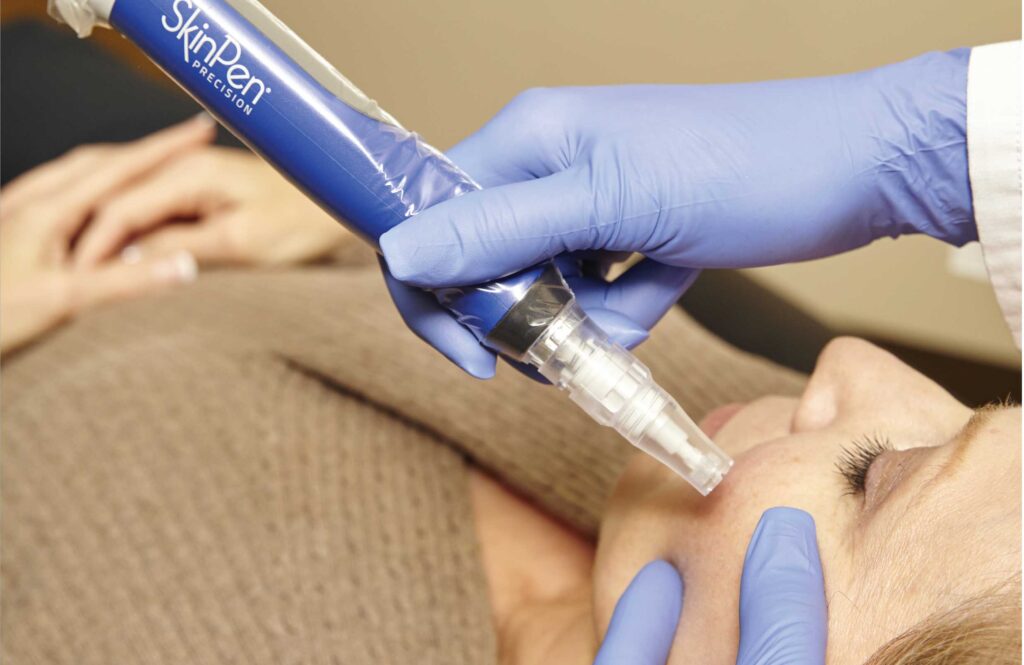
Microneedling uses a cluster of very fine needles to create thousands of controlled microchannels in the skin. Those tiny channels trigger your body's natural wound-healing response, which lays down fresh, organized collagen with minimal heat and minimal downtime. As that new collagen fills in from underneath, depressed scars lift, texture smooths, and skin firms.
Most acne scarring is the reason patients first look into this treatment. Roughly 80 to 90 percent of acne scars are atrophic, meaning they are small depressions left behind when collagen is lost during the healing of a breakout. Atrophic scars take a few shapes: ice pick, boxcar, and rolling, alongside the less common raised hypertrophic or keloid scar. Because each shape behaves differently, good scar treatment is morphology-driven rather than one technique for everyone, and decades of clinical research converge on the same principle: combination protocols tend to outperform any single modality.
It helps to separate two very different things that both get called acne scarring. The flat red or brown marks left after a breakout are post-inflammatory erythema and hyperpigmentation, a color change rather than a true change in the skin's surface. They often fade with time, sun protection, and pigment-focused care such as peels. A true scar is a contour change in the skin, and that is the structural problem microneedling is built to address by rebuilding collagen.
Microneedling does its work in the papillary dermis, the upper layer where much of this collagen remodeling happens. That depth is why it helps with more than scars. Firmer, better-supported skin makes enlarged pores look smaller, softens fine lines, and evens out uneven texture and tone. Different tools reach different depths, which is the structural reason a surface treatment and a collagen-building treatment can complement each other rather than compete. In Jacksonville's high year-round UV, where sun damage tends to show up first as crepey skin and rough texture, that broad effect is part of the appeal.
It also matters that microneedling relies on mechanical micro-injury rather than heat or pigment-targeting energy. That makes it comparatively well tolerated across all skin tones, including Fitzpatrick types III through VI, where aggressive ablative lasers and deep peels carry a higher risk of post-inflammatory hyperpigmentation. In a 2025 network meta-analysis, microneedling stood out for tolerability and comfort relative to more aggressive options, which is part of why it is such a common starting point.
One honest caveat applies to everyone: the best scar treatment is preventing scars in the first place. Early, effective control of inflammatory acne, not picking at lesions, daily SPF, and a steady skincare routine all reduce future scarring. Once scars are established, microneedling and related treatments make them less noticeable rather than erasing them, and that is the realistic frame for any plan.
Signs Microneedling May Be Worth Considering
Microneedling can help with several distinct concerns. A skin evaluation confirms whether it is the right fit for yours, and whether a combination approach would serve you better.
Rolling and shallow boxcar acne scars
These broad, soft-edged depressions respond best to microneedling, because new collagen can fill them in from below. Deep, narrow ice-pick scars usually need focal techniques such as TCA CROSS or punch methods, so most plans for true scarring combine approaches.
Rough or uneven texture
Skin that feels bumpy, looks dull, or no longer catches light evenly often improves over a series as collagen reorganizes. This is one of the most common reasons patients in Riverside and San Marco ask about microneedling for everyday skin quality.
Enlarged-looking pores
Pores do not literally shrink, but firmer, better-supported skin around them tends to make them look tighter and less obvious, most often in the central T-zone where they read largest.
Early fine lines and crepey skin
Rebuilt collagen can soften fine lines and the thin, crepey skin that Florida sun tends to create on the neck and chest, often where sun damage shows first in this climate.
Darker skin tones seeking a lower-pigment-risk option
Because microneedling works by depth rather than by targeting pigment, many patients with Fitzpatrick III through VI skin choose it over ablative lasers or deep peels to lower the chance of post-inflammatory hyperpigmentation. For richly pigmented skin, choosing the right tool is as much a safety decision as an efficacy one.
Concerns that need a careful, honest screen
Active breakouts, recent isotretinoin use, and keloid-prone or deep ice-pick scarring all change the plan. These are exactly the situations where a provider may recommend timing, combination care, or a referral rather than microneedling alone.
How We Approach Microneedling in Jacksonville
At Miami Vein & Wellness in Jacksonville, microneedling starts with a skin evaluation rather than a booked treatment. Your provider looks at what you are actually dealing with, classifies any scarring by shape, and maps out whether microneedling on its own will serve you or whether pairing it with another tool makes more sense. That matters because no single treatment fully removes deep scars, and combination protocols consistently outperform any one modality.
When microneedling is the right fit, we use SkinPen microneedling, the first device FDA-cleared specifically for facial acne scars. In its pivotal trial of three sessions spaced four weeks apart, about 90 percent of patients showed improvement in scar appearance at six months. Those numbers describe a study population, not a promise, but they are a fair illustration of what a well-run series can do. A typical evidence-based course runs three to six sessions about four to six weeks apart, with collagen remodeling continuing over the following six to twelve months.
The treatment is comfortable for most patients once we apply topical numbing, which is exactly why we numb first rather than skipping that step. Expect redness and mild swelling for roughly one to three days, and visible smoothing that builds over about three months as collagen matures. Because freshly treated skin and open microchannels need protection, diligent daily SPF is a non-negotiable part of any plan here, and the first few days are not the time for beach sun, saltwater, or chlorine. Pairing microneedling with a surface treatment such as a chemical peel can treat multiple layers at once, and a 2025 meta-analysis found that combination significantly outperformed either treatment alone for atrophic acne scars.
What a Microneedling Plan Looks Like, Step by Step
The procedural detail lives on the SkinPen service page; here is the education-level picture of how a course unfolds from first visit to final result.
-
Skin evaluation and scar mapping
Your first visit is an assessment, not a treatment. Your provider examines your skin, separates true scars from flat post-inflammatory marks, classifies any scarring by shape, and recommends whether microneedling alone or a combination plan fits your goals.
-
Numbing, then the treatment
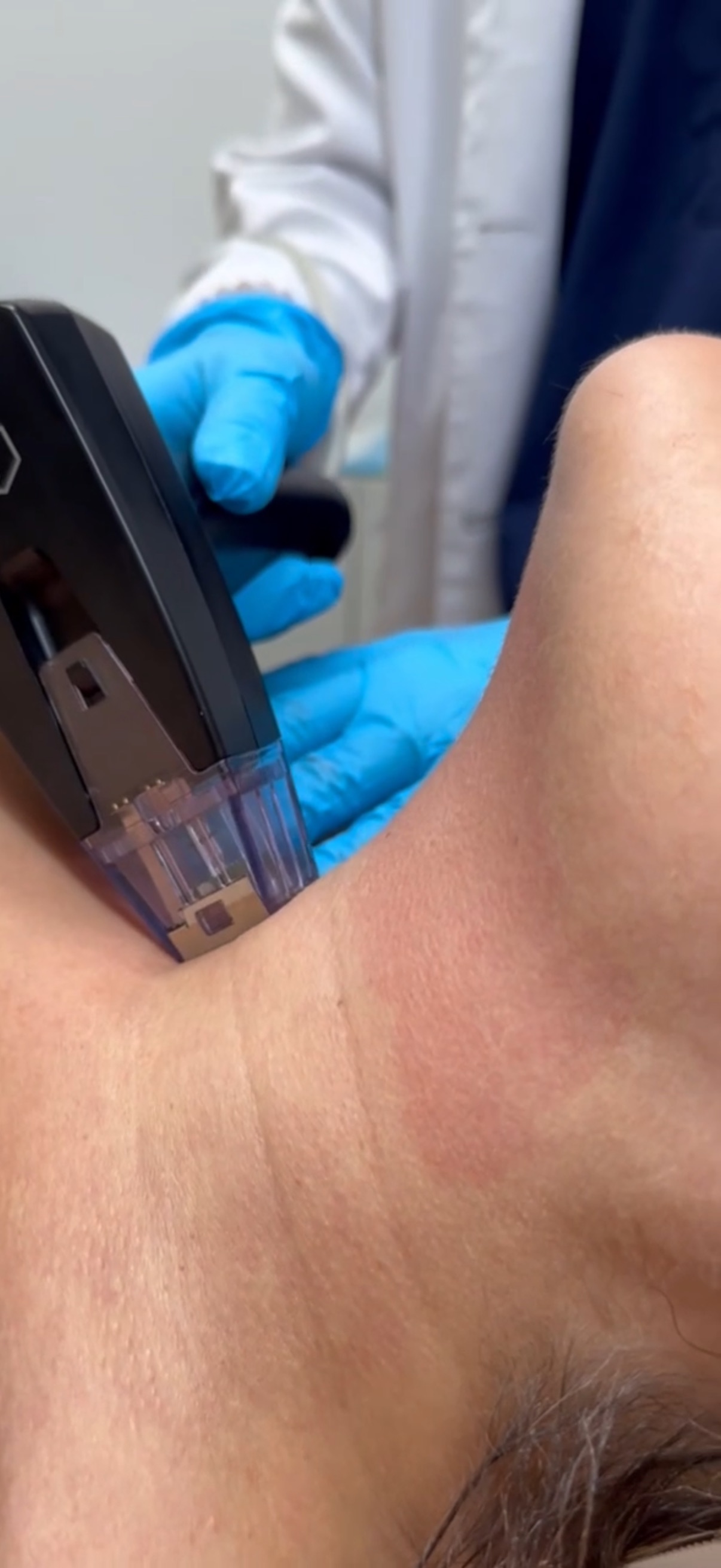
On a treatment day, topical numbing is applied first so the session is comfortable for most patients. The device then creates controlled microchannels across the area. This is collagen induction, not a surface peel, so there is no heavy peeling phase.
-
One to three days of mild downtime
Expect redness and mild swelling, similar to a light sunburn, for roughly one to three days. Most people return to normal routines quickly, with diligent SPF and gentle aftercare while the skin's surface settles.
-
A series, spaced out
A typical course is three to six sessions about four to six weeks apart, because collagen rebuilds gradually between visits. Your provider confirms a specific number for your skin, and milder texture concerns may need fewer than deeper scarring.
-
Results that keep building
Visible smoothing builds over roughly three months, and collagen remodeling continues for six to twelve months after the series. The honest goal is meaningful improvement that makes scars and texture less noticeable, and individual results vary.
Wondering Which Treatment Your Skin Actually Needs?
At your visit, a provider assesses your skin and tells you candidly what it calls for, which might be microneedling, a peel, a layered plan, or a referral when scarring needs specialist care.
Schedule a skin evaluationWhy Patients Choose Miami Vein & Wellness in Jacksonville
Our Jacksonville office is a new local clinic backed by established, physician-led sister practices in Miami, including the deeply researched Miami Skin Spa. That means you get a brand-new office near home with the clinical depth and protocols of a long-running practice behind it.
There is a real difference between a medical microneedling treatment and the derma-rollers or discount pens sold elsewhere. A roller drags an uncontrolled depth across the skin and mostly irritates it. Our treatments run on a genuine, FDA-cleared SkinPen device with fresh, single-use cartridges and physician oversight, and the depth, areas, and number of visits are mapped to your skin instead of sold as a fixed bundle.
- Physician-supervised evaluations before any treatment is booked
- Sterile, single-use SkinPen cartridges on a genuine FDA-cleared device
- Honest screening for active acne, recent isotretinoin, and keloid-prone skin
- Scar-type-driven plans that may combine treatments for better results
- Backed by established, physician-led sister practices in Miami
Frequently asked questions
What does microneedling actually do for texture, scars, and pores?
Microneedling is collagen induction therapy: fine needles create controlled microchannels that trigger your skin's wound-healing response, prompting fresh, organized collagen to form. That new collagen fills atrophic scars from below, smooths rough texture, and makes pores look smaller as the surrounding skin firms. The changes build gradually rather than appearing overnight, and results vary from person to person.
Which acne scars respond best to microneedling?
Rolling and shallow boxcar scars, the broad, soft-edged depressions, respond best because new collagen can fill them in. Deep, narrow ice-pick scars usually need focal techniques such as TCA CROSS or punch methods, and raised hypertrophic or keloid scars call for a different plan entirely. Most faces show a mix of scar types, so plans are often combined rather than relying on microneedling alone.
Are my red or brown acne marks the same as scars?
Often not. The flat red or brown marks left after a breakout are post-inflammatory erythema and hyperpigmentation, a color change rather than a change in the skin's contour. They tend to fade with time, sun protection, and pigment-focused care such as peels. A true scar is a structural change in the surface, which is what microneedling addresses by rebuilding collagen. Your evaluation sorts out which you actually have, because they are treated differently.
How many sessions will I need, and when will I see results?
A typical evidence-based course is three to six sessions spaced about four to six weeks apart. Visible smoothing builds over roughly three months as collagen remodels, and that remodeling continues for six to twelve months. Your provider recommends a specific number at your consultation based on your skin and goals, and results vary.
Is microneedling safe for darker (Fitzpatrick III to VI) skin?
It is generally well tolerated. Because microneedling works by mechanical depth rather than by targeting pigment, it carries a comparatively lower risk of post-inflammatory hyperpigmentation than ablative lasers or deep peels. For richly pigmented skin, that makes device choice as much a safety decision as an efficacy one, which is a key reason many patients with skin of color choose it. Your evaluation still tailors depth and aftercare to your skin.
Microneedling vs. a chemical peel: which is right for me?
They work in different directions. Microneedling rebuilds from below by stimulating collagen, which suits scars, fine lines, and pore size. A peel exfoliates from above, which is better for surface tone and pigment. A 2025 meta-analysis found that combining the two outperformed either alone for atrophic acne scars, so the answer is often a sequence rather than one or the other. You can read more about chemical peels in Jacksonville, and your consultation will sort out the right order.
What is the difference between a medical SkinPen treatment and an at-home derma-roller?
SkinPen is an FDA-cleared device with precisely controlled depth, sterile single-use cartridges, and physician supervision. An at-home roller drags an uncontrolled depth across the skin and mostly causes irritation, not the organized collagen remodeling a controlled treatment can produce. A medical setting also screens for active acne, recent isotretinoin use, and keloid-prone skin before treating.
See Where Microneedling Fits for Your Skin
Smoother texture, softer fine lines, and improvement in acne scarring are realistic goals when microneedling is matched to the right concern and performed by a team that answers to a physician. Individual results vary, and the honest plan sometimes includes combining treatments or referring out.
Your first step is a consultation at our Jacksonville office, serving patients from Riverside and San Marco to Ponte Vedra, Mandarin, and the Beaches, where we evaluate your skin and map out what makes sense for your goals.
Book your consultation onlineOr call/text (904) 310-7186.
Sources & further reading
Education on this page draws on the clinical libraries of our sister practices in Miami.
- Acne Scars: A 2026 Clinical & Evidence Review — Miami Skin Spa
Provider-reviewed, fully cited source for mechanism, scar morphology, papillary-dermis depth, color-vs-contour marks, SkinPen FDA and trial data, tolerability, prevention, and combination evidence.
- Scar Removal and Scar Treatment — Miami Skin Spa
Supports darker-skin safety, the limits of fully removing scars, downtime expectations, and the value of early treatment.
- Skin Resurfacing — Miami Skin Spa
Frames microneedling within the resurfacing toolkit and supports its use for texture, fine lines, and enlarged pores.
- SkinPen Microneedling — Miami Skin Spa
Sister-practice service page covering candidacy screening, numbing and comfort, honest expectations, and the source of the microneedling procedure photos shown here.