Jacksonville treatment guide
Chemical Peels in Jacksonville: Sorting Out Sun Spots, Melasma, and Post-Acne Marks
If your skin has darkened in patches, freckled unevenly, or held onto marks long after a breakout cleared, you are looking at hyperpigmentation. It is one of the most common skin concerns we see in Northeast Florida, and the first step is not a treatment at all. It is figuring out which kind of pigment you actually have.
That distinction matters, because sun spots, melasma, and post-acne marks each behave differently and respond differently to a chemical peel. This page walks through how to tell them apart and where a peel honestly fits.
Book a skin evaluationWhat Hyperpigmentation Is — and Why the Type Matters
Hyperpigmentation simply means excess melanin, the pigment that gives skin its color. But that single word covers several distinct problems that look similar and act very differently. Sun and age spots are surface pigment driven by years of UV exposure, and they tend to clear well. Post-inflammatory hyperpigmentation, or PIH, is the flat brown mark left where a breakout or injury healed, and it can linger for months, especially in deeper skin. Freckles are benign and sun-driven. Melasma is a chronic, relapsing condition driven by hormones and light that often sits deeper and is easily made worse by aggressive treatment.
The pigment itself is made by cells called melanocytes at the base of the epidermis, using an enzyme called tyrosinase. When UV light, hormones, or inflammation switch those cells into overdrive, melanin builds up — and where it lands is what makes a spot easy or hard to treat. Pigment that stays in the epidermis, the outer layer of skin, sheds and clears relatively well with treatments that speed cell turnover. Pigment that drops into the dermis, the layer below, is engulfed by deeper cells and clears slowly, resisting topical creams entirely. This is why two people with what looks like the same dark spot can have completely different outcomes from the same treatment.
Melasma deserves a closer look, because it is the type most often mistreated. Modern dermatology treats it less like a simple stain and more like a photoaging process: overactive pigment cells, a vascular component that makes patches look slightly flushed, and a weakened boundary between skin layers that lets pigment slip deeper. It is driven not only by UV but by visible light, heat, and hormones — which is why it so often begins in pregnancy and flares in hot, humid weather. Roughly nine in ten cases occur in women, and it is most common in medium-to-deep skin tones.
Depth and tone together also decide what is safe. In deeper skin, melanin is more reactive, so the same treatment that clears a sun spot on fair skin can trigger a fresh dark mark if it is too aggressive. That is the central safety principle in pigment care, and it is why device choice and peel depth — not just the diagnosis — determine a good result. A new mark left behind by over-treatment can end up worse than the pigment you started with.
So the right approach depends on three things: the type of pigment, how deep it sits, and your skin tone. Every honest plan is also built on one non-negotiable foundation, which is daily sun protection. Because skin never stops making pigment, sun and visible light simply rebuild spots without it — and for pigment-prone skin, a tinted mineral sunscreen with iron oxides matters, since ordinary sunscreen lets the visible light that drives melasma through. That is the framing we start from in Jacksonville before any peel enters the conversation.
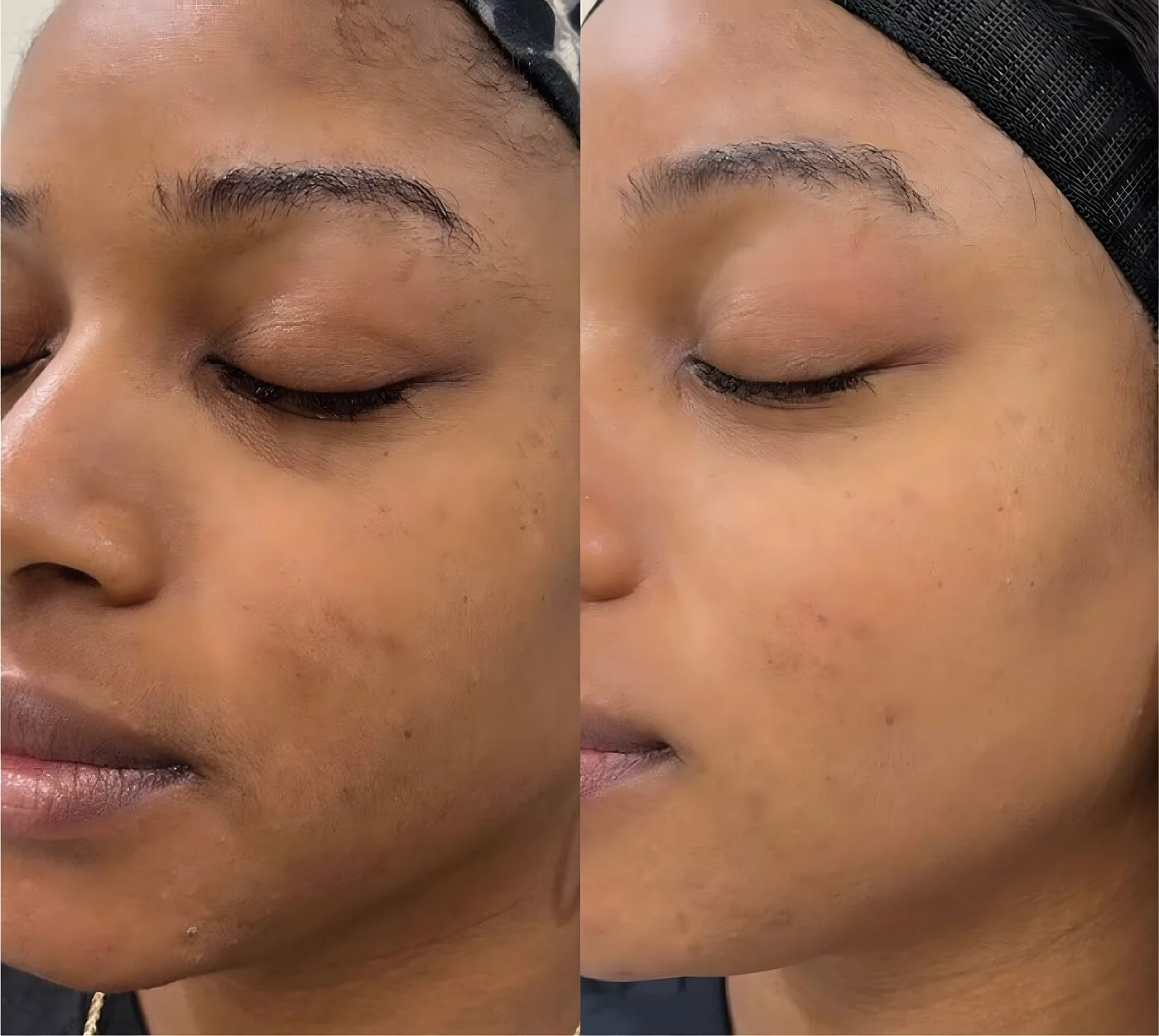
Which Kind of Discoloration Are You Seeing?
These patterns help you sort what you are looking at. A skin evaluation confirms it before any treatment is chosen.
Sun spots and age spots
Discrete, well-defined brown spots on the areas that catch the most sun — the cheeks, forehead, hands, and chest. They build up over years of cumulative UV, which is why they are so common after a lifetime of Florida beaches, boating, and golf. This is surface, epidermal pigment, and it tends to respond well to resurfacing.
Melasma
Larger, symmetrical, mask-like patches, often across the cheeks, upper lip, or forehead, that darken with sun and heat. Melasma is hormone- and light-driven, frequently sits deeper, and is easily inflamed by harsh treatment. It is controlled rather than cured, which shapes the whole plan.
Post-acne marks (PIH)
Flat brown or red marks sitting exactly where a pimple or irritation used to be. They are pigment, not scars, and not active acne — just leftover color from inflammation. Humidity and sweat can keep this cycle going, and the marks fade slowly, especially in deeper skin tones.
Freckles
Small, genetic, sun-darkened spots that deepen in summer and fade in winter. They are benign, but a peel or laser only lightens them temporarily because sun brings them back — which is why daily protection, not treatment, is the real long-term control.
Rough, blotchy sun damage
Photoaging shows up several ways at once: uneven blotchy pigment, redness and broken capillaries, rough texture and fine lines. Much of this surface change responds to a series of peels, though deep wrinkles and laxity need other tools.
A spot that needs a doctor first
Any spot that is new, growing, has irregular borders or mixed colors, or itches or bleeds should be checked by a dermatologist before any cosmetic treatment, because a flat brown spot can occasionally be an early melanoma. Rough, scaly patches called actinic keratoses are precancers handled medically, not cosmetically.
How a Chemical Peel Fits the Plan in Jacksonville
A medical chemical peel works by exfoliating pigmented cells from the outer layer of skin and speeding up cell turnover. That mechanism is genuinely useful for surface pigment, so peels can help fade sun spots, many post-acne marks, and epidermal melasma. They are far less effective for deep, dermal pigment, which is the honest reason some spots fade beautifully while others barely budge. A series of peels paired with daily sun protection gives the best results, not a single dramatic session — and for post-acne marks specifically, the evidence is strongest when a peel is layered with a topical retinoid rather than used alone.
Skin tone shapes how we use them. Because aggressive or heat-based treatment can inflame pigment and trigger new marks, peels are kept superficial in deeper skin tones, where well-chosen, gentler peels are preferred. The VI Peel formulations we use are designed to be safe across a wide range of skin tones, with candidacy confirmed at your consultation rather than assumed. For melasma specifically, a mild peel is an adjunct that accelerates results alongside topicals and strict photoprotection — it is never a stand-alone fix, because melasma is a layered, recurring condition that no single tool erases.
Where a peel sits in the order matters too. Across the pigment literature, the consistent ladder is photoprotection and proven topicals first, peels as a second-line accelerator, and energy-based devices last and most cautiously. Skipping straight to an aggressive laser is how melasma tends to get worse. A peel slots into that middle rung well: it speeds fading and brightens tone without the heat that can backfire on reactive skin.
When a peel is the right tool, our in-office option is the medical-grade VI Peel, where you will find the procedure-day timeline, the peeling-days window, and pricing. A quick local tip: fall and winter are the easiest peel seasons in Northeast Florida, because lower UV makes sun avoidance simpler during the healing window. And because peels address pigment and surface tone but not texture or scarring, your plan may pair them with other approaches depending on what your skin actually needs.
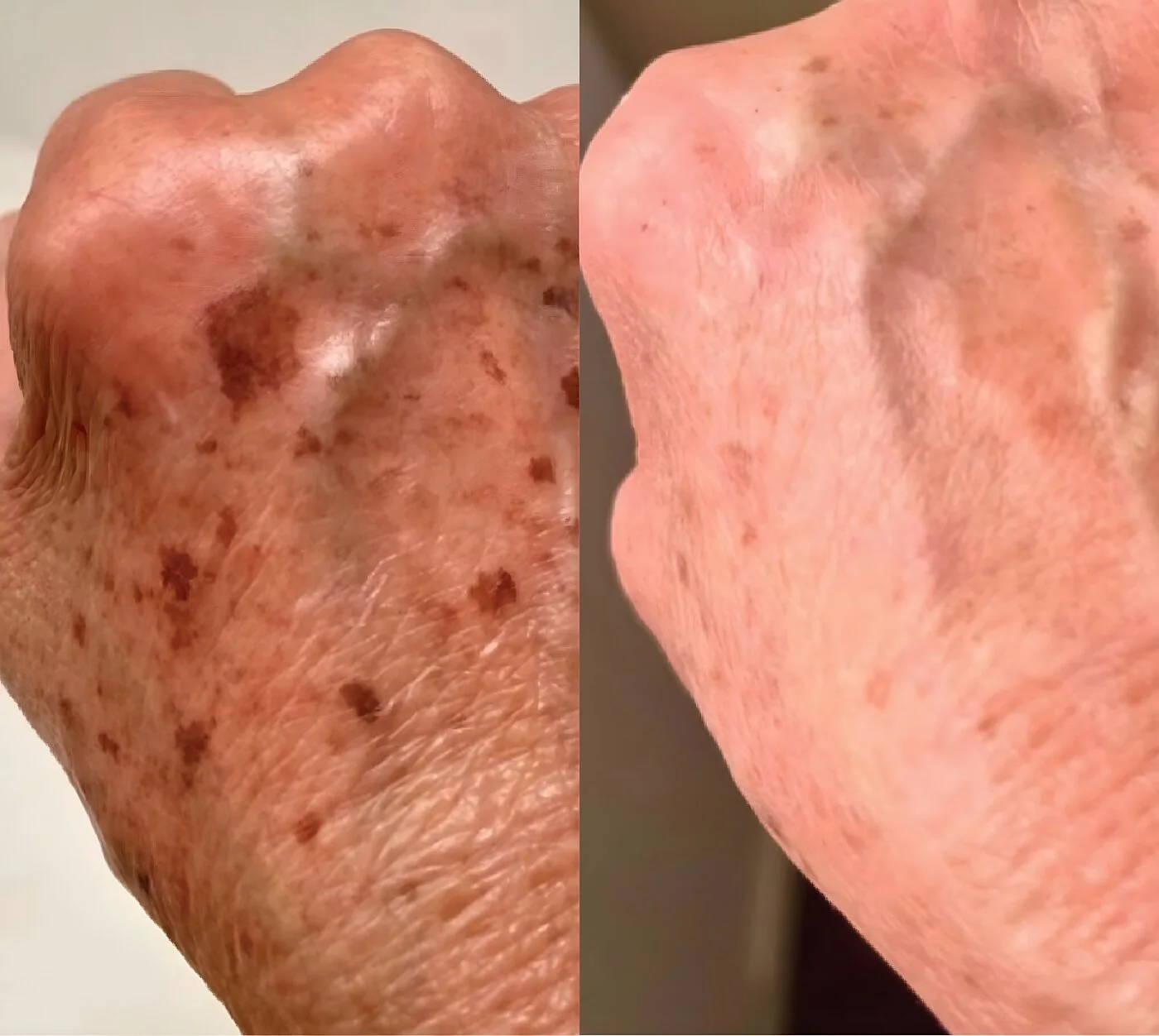
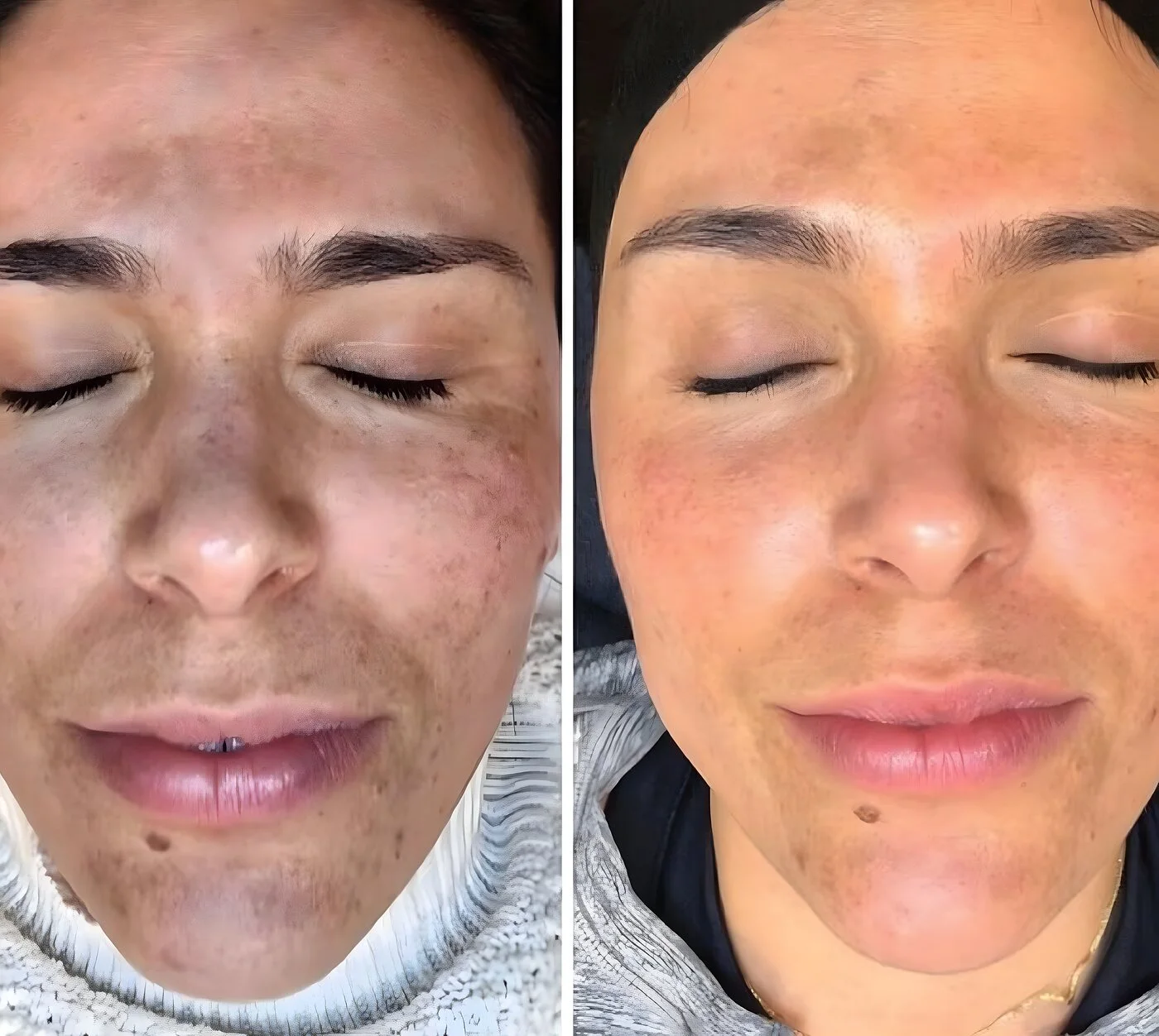
What a Pigment Plan Looks Like, Step by Step
Pigment responds slowly because melanin turns over gradually, so results build over weeks to months. Here is the arc most plans follow.
-
Diagnose first
Your visit starts by identifying the pigment type and how deep it sits, and ruling out anything suspicious. This single step is what separates results from setbacks, because a sun spot, a post-acne mark, and melasma each call for a different approach.
-
Build the foundation
Daily broad-spectrum sun protection — ideally a tinted mineral sunscreen with iron oxides for pigment-prone or melasma-prone skin — and an appropriate home regimen start from day one. Without this, anything done at the surface works against the tide.
-
Treat in a series
A chemical peel is delivered as a short series rather than one session, with depth and formulation matched to your skin tone. Sun spots and surface pigment often respond within a few visits; deeper or stubborn pigment takes longer and fades partially.
-
Let results build
Pigment fades gradually as melanin turns over, typically over two to six months. Epidermal pigment clears fastest; dermal and mixed melasma clear more slowly. A steady, layered plan consistently beats any single aggressive treatment.
-
Maintain it
Because skin keeps making pigment and melasma relapses, sun protection and periodic maintenance hold your results. Maintenance is part of the plan, not a sign that anything went wrong. Results vary from person to person.
Not Sure If It's Melasma, a Sun Spot, or a Mark?
The fastest way to a plan that works is a skin evaluation, where a provider identifies the type and depth of your pigment and recommends whether a peel, another treatment, or a medical referral is the right next step.
Schedule a skin evaluationPigment Care at Miami Vein & Wellness in Jacksonville
Miami Vein & Wellness in Jacksonville is the newest practice in a family that includes Miami Skin Spa in Brickell and Miami Vein Center. That means the same provider-reviewed pigment protocols, VI Peel formulations, and skin-tone-aware screening standards developed in one of the most skin-diverse markets in the country are now available in Northeast Florida.
For patients from Riverside and San Marco to Ponte Vedra and the Beaches, that translates to a consultation that starts by identifying your pigment type before anyone reaches for a treatment, and honest expectations about what a peel can and cannot do.
- Diagnosis-first: pigment type and depth identified before any peel
- Peels chosen and kept appropriate for your skin tone
- Honest framing — melasma is controlled and faded, not cured
- Suspicious or changing spots referred for medical evaluation first
- Provider-reviewed protocols backed by an established sister practice
Frequently asked questions
How do I know if my dark spots are sun spots, melasma, or post-acne marks?
Sun spots are discrete, well-defined, and appear on sun-exposed areas from years of cumulative UV. Melasma shows up as larger, symmetrical, mask-like patches that darken with sun and heat, driven by hormones and light. Post-acne marks are flat brown or red marks sitting exactly where a breakout or injury was.
Each is treated differently, and getting it wrong can make pigment worse — which is why an evaluation precedes any peel. A provider may also use a Wood's lamp to judge how deep the color goes, since depth predicts how well a spot will respond.
Will a chemical peel get rid of melasma for good?
No honest provider promises that. Melasma is a chronic, relapsing condition — close to half of patients see it return within six months without maintenance. A peel is an adjunct that can speed fading alongside topicals and strict tinted-sunscreen protection, never a stand-alone cure.
The realistic goal is long-term control and lighter, more even skin. Surface (epidermal) melasma fades fastest; deeper dermal and mixed types fade more slowly and only partially, so a patient, layered plan beats any single aggressive treatment. Results vary from person to person.
Why did a previous peel or laser make my pigmentation worse?
Harsh peels and heat-based devices can inflame melasma and trigger post-inflammatory hyperpigmentation, especially in deeper skin tones where melanin is more reactive. The heat and inflammation can actually feed the very pigment you are trying to fade.
Depth and formulation have to be matched to your skin type, which is exactly why a skin analysis comes before any device or peel here — and why we sometimes advise leading with topicals and sun discipline instead of jumping to a stronger treatment.
Are chemical peels safe for Black and brown skin?
Yes, when they are kept superficial and chosen by skin type. Well-chosen, gentler peels are preferred in deeper skin tones because aggressive peels carry more risk of triggering new pigment, and a test approach plus conservative depth keeps that risk low.
The VI Peel formulations we use are designed to be safe across a wide range of skin tones, with your candidacy confirmed at consultation. Jacksonville's diversity is exactly why a one-size-fits-all peel does not work here.
Why do some dark spots fade with peels while others barely budge?
It comes down to depth. Pigment in the outer layer of skin sheds well with peels and faster cell turnover. Pigment that has dropped into the deeper layer, common with stubborn melasma and old PIH, clears slowly and resists surface treatment, sometimes needing different tools or topicals altogether.
This is why darkness alone does not predict the outcome — two spots that look identical can sit at different depths and respond completely differently.
Can a peel reverse years of Florida sun damage?
Much of the surface damage, yes. A series of peels lifts dull, pigmented surface cells and smooths texture, and works well as a companion to other treatments. But nothing stops new damage from forming, and deep wrinkles and laxity need other approaches.
Daily sunscreen is what preserves results — in a randomized trial, daily users showed 24 percent less skin aging than occasional users. Prevention genuinely outperforms repair.
Should a dark spot be checked by a doctor before treating it cosmetically?
Yes. Any spot that is new, growing, irregular, multi-colored, itching, or bleeding should be evaluated medically first, since a flat brown spot can occasionally be an early melanoma — and treating an undiagnosed lesion cosmetically can mask it and delay care.
Rough, scaly patches called actinic keratoses are precancers handled medically, with more than 70 percent of certain skin cancers arising from them. Cosmetic treatment is never a substitute for a skin-cancer check.
Start by Knowing What You're Actually Treating
Northeast Florida's year-round sun is generous with beach days and hard on skin tone over time. The smartest first move with any discoloration is identifying its type and depth, so the plan fits the problem instead of guessing at it.
A skin evaluation gives you that clarity, honest recommendations, and a sense of whether a peel, another treatment, or a medical referral makes sense — and booking online takes under a minute.
Book your skin evaluationOr call/text (904) 310-7186.
Sources & further reading
Education on this page draws on the clinical libraries of our sister practices in Miami.
- Hyperpigmentation Treatment: Melasma & Dark Spots — Miami Skin Spa
Pigment-type taxonomy (sun spots, PIH, freckles, melasma), the melanocyte/tyrosinase mechanism, and epidermal-versus-dermal depth — the backbone of this page.
- Melasma Treatment: Pigment & Dark Spot Care — Miami Skin Spa
Control-not-cure framing, the six-month relapse rate, melasma as a photoaging process, peels-as-adjunct rule, and tinted iron-oxide sunscreen evidence.
- Dark Spot Treatment: Sun Spots & Age Spots — Miami Skin Spa
Peels for epidermal pigment and post-acne marks, the salicylic-peel-plus-retinoid evidence, the superficial-only rule for darker skin, and melanoma red-flag screening.
- Sun Damage Treatment: Photoaging & Sun Spots — Miami Skin Spa
Photoaging mechanism, peels as a companion to light and laser, the 24 percent daily-SPF stat, and the actinic keratosis precancer boundary.
- VI Chemical Peels — Miami Skin Spa
The sister-practice VI Peel menu, formulation-by-concern detail, the all-skin-types safety positioning, and the before/after results shown on this page.