Jacksonville treatment guide
Hair Loss Treatment in Jacksonville: Understanding Why It Happens and What Helps
Noticing more hair in the drain, a part that looks wider than it used to, or a scalp that shows through under bright light can be unsettling. The good news is that most thinning has an identifiable cause, and much of it responds to treatment when you catch it early.
This page walks through what is actually behind hair loss, which kinds tend to respond, and the non-surgical options available in Jacksonville, so you can make a confident decision instead of guessing.
Book a scalp consultationWhat Hair Loss Is, and Why It Happens
Hair grows in cycles. Each follicle spends time in an active growing phase, then rests and sheds before starting over, and the full cycle takes about a month on average. At any given moment your follicles are not all in the same phase, which is an important detail: treatments that depend on a follicle being in its active growth phase can only act on the share of follicles that happen to be there. Shedding a certain amount every day is completely normal. Hair loss becomes a concern when more hair leaves than grows back, or when follicles gradually produce finer, weaker strands over time.
The most common reason is hereditary pattern loss, driven by a combination of genetics and hormones. But it is far from the only cause. Stress, postpartum and menopausal hormonal shifts, thyroid issues, nutritional gaps, certain medications, and tight hairstyles that pull on the roots can all push hair into a prolonged shedding phase. Because the cause shapes which treatment makes sense, identifying it comes first. A useful way to think about it is the root-cause approach our Miami sister practice uses in functional medicine: rather than treating a symptom in isolation, you look at how genetics, environment, and lifestyle interact, because the body works as one connected system.
It also helps to understand that not all thinning is permanent. When a stressful event, illness, childbirth, or a hormonal change pushes an unusually large number of follicles into the shedding phase at once, the result is a wave of loss that often arrives weeks or months after the trigger and tends to recover as the trigger resolves. Pattern loss behaves differently, with follicles slowly miniaturizing over years. Telling these apart is part of why an evaluation matters, because the timeline and the right plan are not the same for both.
Living in Northeast Florida adds its own layer. Year-round sun, humidity, salt water, chlorine, and frequent heat styling all stress hair that may already be weakening. When your scalp is exposed most of the year, noticing and acting on early thinning matters even more. The encouraging part is that follicles which are weakened but still alive can often be supported, which is why early evaluation is worth your time.
One honest boundary frames everything that follows: the non-surgical options below work on follicles that are alive but underperforming, not on areas that have been fully bald and smooth for years. Catching loss while the follicle is still in the game is what gives you the most to work with, and it is why this page leans so hard on acting early rather than waiting to see how far things go.
Early Signs of Thinning and Who Tends to Notice Them
Hair loss rarely arrives overnight. These are the changes people most often notice first, and the patterns that tend to respond well to non-surgical treatment.
A widening part or smaller ponytail
For many women, thinning shows up as diffuse loss across the top of the scalp rather than bald patches. A part that keeps looking wider, or a ponytail that feels thinner in your hand, is often the earliest clue.
More scalp showing under bright light
Catching your reflection and seeing more skin through your hair at the crown or hairline, especially under bathroom or car lighting, is a common early sign that density is dropping.
Increased shedding in the shower or brush
A noticeable uptick in hair on your pillow, in the drain, or in your brush can signal that more follicles than usual have entered the shedding phase, sometimes after stress, illness, or a hormonal change.
A receding hairline or thinning crown
In men, pattern loss often begins at the temples or the crown. Treating weakening follicles before they shut down generally leaves more to work with, so earlier is better.
Shedding after a major life event
Childbirth, significant stress, rapid weight change, or starting a new medication can trigger a wave of shedding weeks or months later. This type often improves as the trigger resolves, and treatment can support the recovery.
Follicles that are weakened but still active
Treatments work best on thinning hair and early-stage loss, where follicles are alive but underperforming. Areas that have been fully bald and smooth for years generally do not respond, which is honest to know up front.
How Hair Loss Is Treated in Jacksonville
Because thinning has different causes, there is no single fix that fits everyone. A good plan starts by identifying why you are losing hair, then matches the approach to the cause and the stage of loss. At our Jacksonville practice that means a consultation-first, physician-led evaluation rather than a one-size product handed across a counter.
When follicles are weakened but still active, platelet-rich plasma is one of the most studied non-surgical options. PRP concentrates the growth factors from your own blood and places them into thinning areas of the scalp, where they signal follicles toward an active growth phase. The mechanism is the same one studied in skin applications, where adding PRP to a needling treatment roughly tripled the odds of meaningful improvement, an odds ratio of about 2.97, though an umbrella review of that literature rates the overall certainty of the evidence as low. We treat that figure as it should be treated: it describes study populations in skin, not a promised hair outcome, so we set honest, individual expectations. Our PRP hair restoration treatment page covers how the procedure works step by step, the session cadence, and pricing.
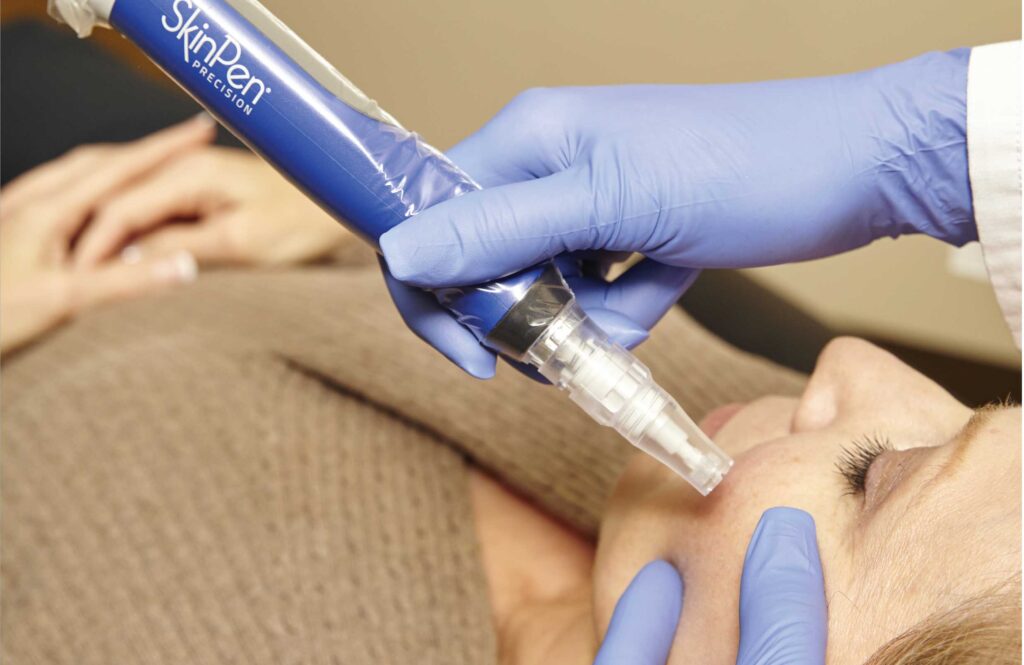
Because hair grows in cycles and treatment only acts on follicles in their active phase, PRP is delivered as a spaced-out series rather than a single visit. Some plans layer in complementary methods. Scalp microneedling works through controlled micro-injury that triggers the body's own collagen and elastin response, and the same micro-channels it creates can help regenerative solutions reach deeper rather than sitting on the surface, which is exactly why growth-factor solutions are delivered alongside needling rather than on their own. An exosome scalp add-on may be discussed as an emerging option. Exosomes are cell-signaling vesicles that remain investigational and not FDA-approved, and the FDA has cautioned consumers about unapproved exosome and regenerative products, so we treat them as an option to consider for completeness, never a standard of care.
When the cause sits below the scalp, the plan reaches further. Hormonal shifts from menopause, thyroid changes, or the postpartum period, along with nutritional gaps, can all contribute to shedding, and we will recommend evaluating those root causes when your history points that way. Nutritional support formulated for hair, skin, and nails, the kind of cellular-replenishment approach offered at our Miami sister practice, can complement scalp treatment as part of a whole-person plan, though it supports rather than replaces treatment for pattern loss. Results vary from person to person, and the right combination is something we map out together.

What to Expect, From Consultation to Follow-Up
Hair care is a process, not a single appointment. Here is the arc most patients move through so you know what you are signing up for before you commit.
-
A consultation that starts with the cause
Your first visit is an evaluation, not a sales pitch. We review your history, look at your pattern of thinning, and talk through whether stress, hormonal shifts, nutrition, medications, or hereditary pattern loss are likely contributors, because the cause shapes everything that follows.
-
An honest read on candidacy
We will tell you plainly whether your thinning is the early, follicles-still-active kind that tends to respond, or whether an area has been dormant too long to expect much. Knowing this up front protects you from spending on the wrong thing.
-
A plan matched to your cause and stage
If PRP fits, it is mapped out as a spaced series rather than a one-time treatment, since each session only reaches follicles in their active growth phase. Microneedling, an exosome add-on discussed honestly, or evaluation of hormonal and nutritional contributors may be layered in where your history points that way.
-
Gradual progress, tracked over time
Because hair grows in cycles, change is gradual and builds across the series rather than appearing after one visit. Follow-up appointments let us watch density over the months it takes and adjust the plan as needed. Results vary from person to person.
Not Sure What Is Behind Your Thinning?
A consultation gives you a clear answer about the likely cause and whether your thinning is the kind that responds to treatment, before you commit to anything.
Schedule your consultationWhy Choose Miami Vein & Wellness in Jacksonville
Hair loss is a medical concern, and it deserves a medical setting. Our Jacksonville clinic is physician-led and consultation-first, drawing on the same provider-reviewed standards and regenerative protocols used at our established Miami sister practices, Miami Skin Spa and Miami Vein & Wellness.
We serve patients from across Northeast Florida, from Riverside and San Marco to Ponte Vedra, Mandarin, and the Beaches, and we are deliberate about speaking to women's thinning as clearly as men's, since hair-loss care too often overlooks it.
- Physician-led, consultation-first care that identifies the cause before treating it
- Honest guidance on what treatment can and cannot do, with no overpromising on candidacy
- Plans built separately for female-pattern and male-pattern thinning
- Regenerative protocols informed by our established Miami sister practices
- Follow-up visits to track gradual progress over time
Frequently asked questions
What actually causes hair loss?
The most common cause is hereditary pattern loss, a mix of genetics and hormones. Stress, postpartum and menopausal hormonal shifts, thyroid issues, nutritional deficiencies, certain medications, and tight hairstyles can all contribute as well.
Because the cause shapes the treatment, a root-cause evaluation comes first rather than reaching straight for a product. That mirrors the functional-medicine view our Miami sister practice takes, looking at how genetics, environment, and lifestyle interact instead of treating the symptom alone.
Is my hair loss reversible?
It depends on the stage and the type. Loss triggered by a stressful event, illness, childbirth, or a hormonal change is often temporary and tends to recover as the trigger resolves. Pattern loss is more gradual, with follicles slowly weakening over years.
Treatments like PRP work best on thinning hair and early-stage loss, where follicles are weakened but still alive. They are not designed to restore areas that have been fully bald and smooth for years, so catching loss early gives you the most options.
How does PRP help thinning hair?
PRP concentrates growth factors from your own blood. Placed into thinning areas of the scalp, those signals encourage follicles toward an active growth phase.
In studied skin applications, adding PRP to a needling treatment roughly tripled the odds of meaningful improvement, an odds ratio of about 2.97, though an umbrella review rates the certainty of that evidence as low. Those figures describe study populations rather than promised hair outcomes, so we share results as individual and gradual.
What about exosomes for hair?
Exosomes are cell-signaling vesicles offered as a scalp add-on. They are investigational and not FDA-approved, and the FDA has cautioned consumers about unapproved exosome and regenerative products.
We treat them as an emerging option we can list for completeness rather than a standard of care, and your provider will tell you honestly whether they make sense for your pattern of thinning.
Why does hair treatment take several sessions?
Hair grows in cycles, roughly a month per cycle on average, and your follicles are never all in the same phase at once. Follicle-dependent treatments only act on the follicles in their active growth phase, so a single visit can only reach a share of them.
That is why results build over a spaced-out series rather than appearing after one appointment, and why follow-up over several months is part of the plan.
Does hair loss treatment work for women?
Yes. Thinning is just as real for women, who tend to see diffuse thinning, a widening part, or a smaller ponytail rather than distinct bald spots. We build treatment plans separately for female-pattern and male-pattern loss, tailored to your pattern of thinning.
Could a hormone imbalance be behind my thinning?
It can. Hormonal changes from menopause, thyroid issues, or the postpartum period can drive shedding. A consultation can include a review of your history and, when appropriate, evaluation of hormonal or nutritional contributors before we treat the scalp directly.
Nutritional support formulated for hair, skin, and nails can complement that plan as well, though it supports rather than replaces treatment for pattern loss.
Get a Clear Answer About Your Hair
You do not have to keep watching your part widen or wondering whether anything can help. Understanding the cause is the first step, and from there a realistic, non-surgical plan is usually within reach.
Wherever you are coming from across Northeast Florida, a consultation gives you an honest read on your scalp and a plan built around your goals.
Book your consultationOr call/text (904) 310-7186.
Sources & further reading
Education on this page draws on the clinical libraries of our sister practices in Miami.
- An Evidence-Based Guide to Treatments (PRP & exosome sections) — Miami Skin Spa
Provider-reviewed PRP growth-factor mechanism with the OR 2.97 efficacy figure and low-certainty caveat, plus the honest investigational, not-FDA-approved exosome framing.
- SkinPen Microneedling — Miami Skin Spa
Collagen-induction mechanism and the microchannel-delivery rationale behind pairing scalp microneedling with regenerative add-ons; source of the microneedling-in-action image.
- Laser Hair Removal — Miami Skin Spa
Explains the hair growth cycle, about a month per cycle, follicles never all in the same phase, and why follicle-dependent treatment is delivered as a spaced series.
- Functional Medicine — Miami Vein Center
Root-cause framework, genetics-environment-lifestyle interactions and the body as one connected system, supporting the evaluate-the-cause-before-treating positioning.
- BioTE Hormone Replacement Therapy — Miami Vein Center
Supports the rule-out-hormonal-causes angle through general hormonal-decline framing.
- IV Therapy (Beauty Boost) — Miami Skin Spa
Nutritional support formulated for hair, skin, and nails, cited for the whole-person, support-not-cure angle; source of the nutritional IV image.